
People of all ages can reap many of the benefits of volunteering, such as increased physical activity; reduced stress, depression and anxiety; and more opportunities to meet people. Some of these benefits take on greater significance for seniors, though, and there are other benefits that apply specifically to older adults.
Most Likely To Volunteer
Adults ages 65 and older represent the age group that’s most likely to volunteer, which makes sense. Most retirees are in this age group, and there’s typically more time for volunteering after retirement. Work and (generally) family life no longer require as much time and energy.
Based on data from 2023, more than a quarter — 26.3% — of seniors volunteered in the past 12 months, according to America’s Health Rankings. Within this age group, as education levels and household income increased, so did the proportion of seniors who volunteered.
The Bureau of Labor Statistics also reports that seniors have the highest rates of volunteering, with 7.8% of women and 6.4% of men in this age group volunteering on an average day in 2022.
Health Benefits for Seniors Who Volunteer
For many older adults, volunteering offers physical, mental and emotional health benefits. Compared with those who do not volunteer, seniors who engage in volunteer activities tend to have:
- Better grip strength
- Faster walking speeds
- Less chronic pain
- Lower risk of depression and anxiety, heart disease, high blood pressure, stroke
- Potentially lower risk of dementia and slower biological aging
- Reduced mortality risk
Depending on how older adults spend their time, retirement can erode their sense of purpose — an aspect of well-being that’s often overlooked. Volunteering makes people feel useful because they’re giving back to the community. It’s no surprise, then, that seniors who volunteer report greater life satisfaction.
Volunteering can also create more resilience in older adults: It’s easier to work through challenging times when there’s a reason to push forward. In the absence of (or in addition to) other motivational factors, participating in volunteer efforts can provide that reason.
5 Benefits of Volunteering You May Not Have Thought About
If you want to encourage an older family member or friend to consider volunteering, try offering these reasons:
- You’ll come into contact with people you wouldn’t normally meet.
Depending on what sort of volunteer activities you choose, you may come across people whose backgrounds and cultures are dissimilar to yours, or you might meet others with whom you have a great deal in common. Either way, these are people you wouldn’t meet in the course of your usual routine. - It’s a different way to connect with family members.
A volunteer activity that appeals to all ages can bring the entire family together (or at least grandparents and grandkids) for a rewarding and memorable experience. Older adults without grandchildren (or none close by) can use volunteer activities to bridge the generation gap with younger people who aren’t related to them. - It’ll enhance your self-esteem.
Volunteering often yields feelings of optimism by releasing endorphins and other neurotransmitters, such as dopamine and serotonin. This effect is sometimes referred to as a “helper’s high.” This physiological response, along with knowing you’re helping others, will make you feel good about yourself. - You may see your own circumstances in a different light.
Choosing to volunteer for an organization such as Meals on Wheels or Habitat for Humanity just might amplify your gratitude for what you have. - You can broaden your skill set.
With so many nonprofit and community organizations ready to welcome new volunteers, you’ll find countless opportunities to step outside your comfort zone and try something unfamiliar. You might discover a brand-new passion.
Volunteer Opportunities for Seniors
If you or your parent are inspired to give volunteering a try, you might want to start with a one-day event or something with a similarly low level of commitment. In fact, you might want to try a variety of senior volunteer opportunities until you find one (or more) that’s a good fit.
Where do you look for retirement volunteer opportunities? Make a list of your interests and include experiences you’d like to try. Then check out specialized organizations that align with your interests. They don’t necessarily have to be local; you may be able to help out from home.
AARP lets you explore volunteer opportunities by cause or by AARP program, and you can search for both in-person and virtual volunteer opportunities in your area.
Have you ever dreamed of joining the Peace Corps? It’s not too late. The organization specifically notes that retirees are welcome.
Volunteer Match, now part of Idealist, gives you multiple options to search for volunteer opportunities, and you can filter the results by cause, organization type, and distance from where you live.
If the thought of venturing out on your own to volunteer seems daunting, recruit a friend or family member to go with you. The more the merrier!
Volunteering in Our Community
Knowing how much volunteering can add to the quality of life for older adults, The Vered supports and encourages residents who want to participate in volunteer efforts. Plus, we’re in a fantastic location for finding all kinds of volunteer events and activities.
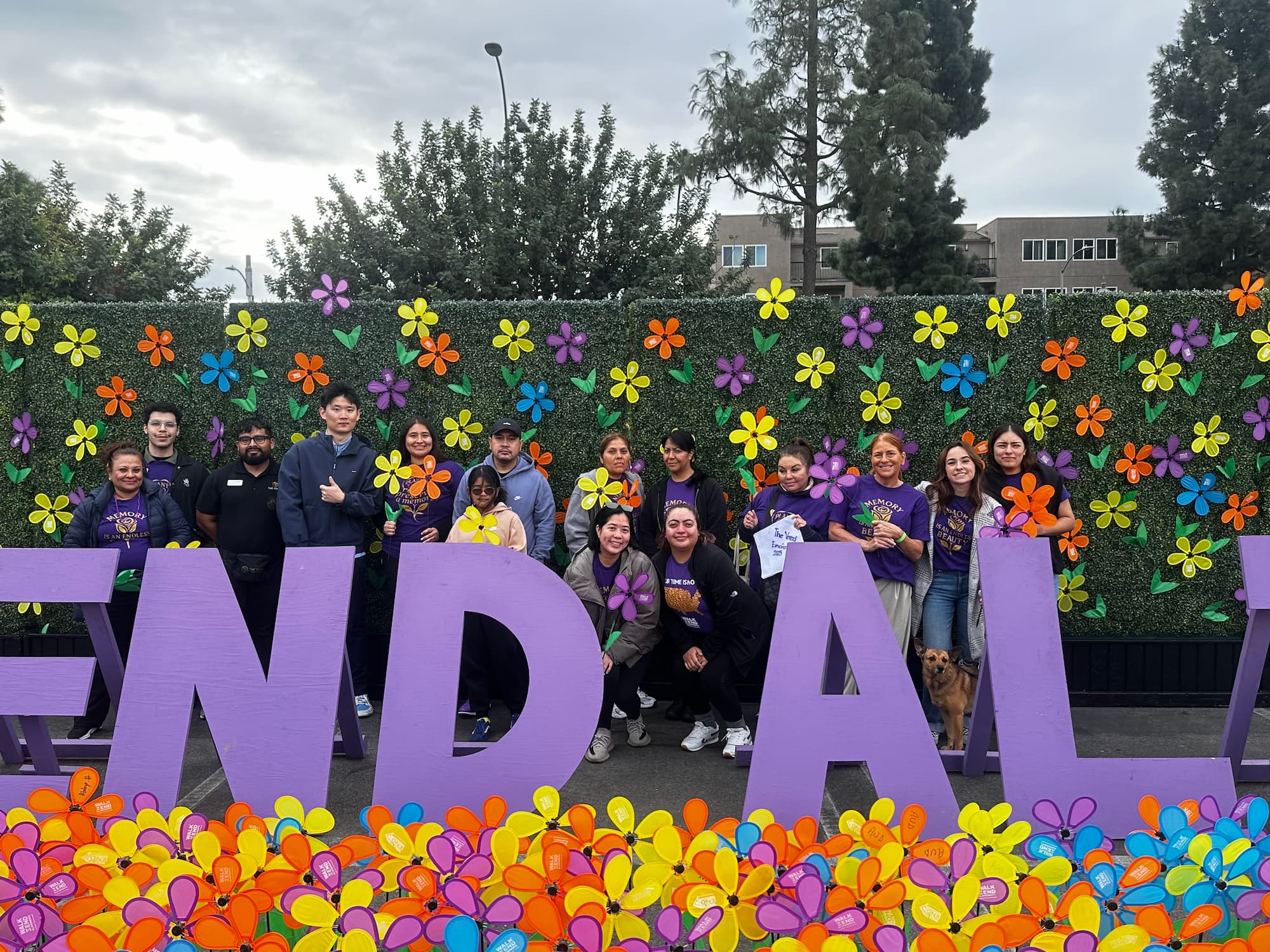
Just recently, several of our staff members participated in the Walk to End Alzheimer’s in downtown Los Angeles. This annual walk is held in more than 600 communities nationwide, raising funds and awareness for the care, support and research efforts of the Alzheimer’s Association. We’re proud of to support the walk’s mission that’s close to our hearts and community.
To learn more about The Vered, give us a call at 818.450.3120 or contact us to schedule a personal appointment with a member of our team.